




Shoulder knots are one of the most common reasons people seek out massage therapy in Australia. That tight, aching tension that builds up between the shoulder blades, or along the top of the shoulder, can restrict movement, disturb sleep, and make everyday tasks uncomfortable. For many people, surface-level approaches offer only brief relief before the discomfort returns.
Deep tissue massage targets the layers of muscle and connective tissue where that tension actually lives. Understanding how it works, what affects the outcome, and what to realistically expect can help you decide whether it may be a useful step in managing your symptoms.
Quick Overview
- Deep tissue massage is a therapeutic technique that uses firm, slow pressure to reach deeper muscle layers and connective tissue in the shoulder area.
- People with persistent shoulder tension, muscle knots, or restricted movement may find it worth exploring, particularly when surface-level approaches haven’t provided lasting relief.
- It targets myofascial trigger points, aims to stimulate blood flow, and may support the breakdown of tissue adhesions. Individual responses vary.
- Session frequency, the underlying cause of tension, lifestyle factors like posture and activity patterns, and the techniques used by the therapist all affect how a person responds.
- The nature, location, and duration of your symptoms are worth discussing with a qualified therapist before starting treatment.
Below, we explain how deep tissue massage works on shoulder knots, what the research suggests, and what to consider before booking a session.
What Are Shoulder Knots and Why Do They Form?
Shoulder knots, often referred to clinically as myofascial trigger points, are localised areas of contracted muscle fibre that remain in a state of tension even when the muscle isn’t actively working. They can cause pain at the site of the knot itself, or send referred pain to other parts of the shoulder, neck, and upper back.
They form for a range of reasons. Poor posture, particularly the kind that comes from extended periods at a desk or looking at screens, places sustained load on the muscles around the shoulder blade and upper trapezius. Repetitive movements from physical work or sports can also overload specific muscle groups over time. Stress, inactivity, and sleeping in an awkward position are other contributing factors.
Problems with muscles can cause pain in other parts of the body, and remedial massage is one complementary approach that aims to locate and treat the source of that discomfort. If you experience persistent or worsening shoulder symptoms, it is worth seeking an assessment from an appropriately qualified health practitioner.
How Does Deep Tissue Massage Work on Shoulder Knots?
Deep tissue massage uses firm pressure and slow, deliberate strokes to reach the deeper layers of muscle and fascia. Fascia is the connective tissue that surrounds and supports muscle groups, and when it becomes tight or restricted, it can contribute to the tension that forms knots.
During a session targeting shoulder knots, a therapist applies sustained pressure directly to areas of tightness. The slow pace is intentional: it allows the tissue time to respond and release, rather than guarding against rapid movement. Specific techniques include: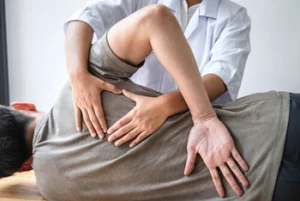
- Stripping: A gliding pressure applied along the length of the muscle, moving with the muscle grain to encourage blood circulation and ease fibres that have become adhesive.
- Friction: Pressure applied across the grain of the muscle, which aims to realign contracted fibres and address adhesions.
- Trigger point pressure: Sustained, direct pressure applied to the specific point of contraction, which may help release the localised tension and reduce referred pain patterns.
- Elbow or forearm pressure: Used when deeper pressure is needed in areas like the upper trapezius or around the shoulder blade, where muscle tissue sits beneath other layers.
The combination of increased blood flow, mechanical pressure on muscle fibres, and stimulation of the nervous system response is thought to contribute to the release of tension in these areas.
What Does the Research Say About Deep Tissue Massage for Shoulder Knots?
People experiencing persistent shoulder discomfort commonly show a high prevalence of myofascial trigger points in the shoulder girdle muscles, suggesting these points may represent an underlying mechanism for shoulder pain that responds to manual treatment.
Massage therapy prompts the release of endorphins, the brain chemicals that contribute to a reduction in perceived pain, and research indicates it is effective in managing a range of musculoskeletal conditions.
It is important to note that research in this area continues to develop, and individual outcomes depend on factors including the severity of the condition, underlying causes, and how well treatment is matched to the person’s needs. Massage therapy works best as part of a broader approach to managing shoulder health, not as a standalone fix.
What Affects How Shoulder Knots Respond to Deep Tissue Massage?
Not everyone responds to deep tissue massage in the same way. Several factors influence how a shoulder knot responds to treatment:
The cause of the tension: Knots linked to poor posture or repetitive strain may respond differently from those associated with a specific injury, underlying joint condition, or systemic contributors like chronic stress or poor sleep. Understanding the source matters.
How long the tension has been present: Longer-standing muscle tension and chronic knots tend to involve more established changes in the tissue, which may mean more sessions are needed before a noticeable shift occurs.
Session frequency and aftercare: A single session may offer temporary relief, but addressing persistent shoulder knots often involves a course of treatment. How a person manages their posture, movement, and recovery between sessions can also affect how well the tissue responds.
The therapist’s technique and experience: Different approaches, including whether the therapist incorporates trigger point therapy, myofascial release, or traditional Chinese medicine techniques like Tui Na, can affect the outcome. A therapist with substantial experience in remedial massage will tailor the approach based on an assessment of the individual’s presentation.
Individual physiology: Muscle density, hydration, tissue condition, and the body’s own healing processes all play a role in how quickly or fully a knot releases.
How to Support Your Recovery Between Sessions
What you do between massage appointments can influence how well your shoulders respond over time. A few practical steps that may help:
- Posture awareness: Prolonged sitting with rounded shoulders or a forward-leaning head position places ongoing demand on the upper back and shoulder muscles. Making adjustments to your workstation and taking regular movement breaks can reduce the load on those areas.
- Gentle stretching: Moving the shoulder through its full range of motion gently each day, particularly the upper trapezius, levator scapulae, and rhomboids, can help maintain the release achieved during massage. Avoid pushing into sharp pain.
- Hydration: Muscle tissue responds better to manual therapy when it is well hydrated. Drinking adequate water throughout the day is a simple but worthwhile habit.
- Heat application: Applying a warm compress to the shoulder area before or after a session may help relax the surrounding tissue and ease mild soreness. If there is acute inflammation or swelling, cold therapy for short intervals may be more appropriate; speak with your therapist about what suits your situation.
- Stress management: Psychological stress is a recognised contributor to chronic muscle tension. Approaches that support the nervous system, whether that is sleep, exercise, or other strategies, can reduce the background level of tension your muscles carry.
Massage therapists in Australia are not legally required to hold formal qualifications, so it is worth choosing someone who is qualified and insured for remedial massage. Private health insurance extras cover may also apply to eligible treatments. Check with your health fund about whether your policy includes a rebate.
When to Pause Before Starting Treatment
Deep tissue massage is not suitable for everyone, and some shoulder symptoms warrant assessment by an appropriately qualified health practitioner before manual therapy begins. Consider seeking that assessment first if: 
- Your shoulder pain came on suddenly following an injury or accident
- You have numbness, tingling, or weakness extending into the arm or hand
- The pain is severe, constant, or worsening rather than fluctuating
- You have a known condition such as a rotator cuff tear, osteoporosis, or a blood clotting disorder
- You are currently undergoing cancer treatment
Shoulder pain has many potential causes, some of which require specific medical management alongside or instead of massage therapy. An appropriately qualified health practitioner can help identify the most suitable pathway for your situation.
A Considered Approach to Shoulder Knots
Persistent shoulder tension can limit range of motion, disrupt daily activity, and become a source of ongoing discomfort if it goes unaddressed. Deep tissue massage offers one evidence-informed approach to managing these symptoms, particularly when the tension is linked to myofascial trigger points in the shoulder musculature.
At Wayne Massage, sessions targeting shoulder knots draw on a combination of remedial massage and traditional Chinese medicine techniques, tailored to each person’s presentation. Health fund rebates are available for eligible treatments.
If you’d like to explore whether deep tissue massage may be suitable for your shoulder symptoms, contact Wayne Massage to discuss your needs.
To book, contact us at the location nearest to you:
- Town Hall/Gadigal: 250 Pitt St, Shop 2, Sydney. Phone: (02) 8073 9382
- Hunter/Pitt: 109 Pitt St, Shop P6, Sydney. Phone: (02) 8073 9376
- Haymarket/Central Station: Shop 13A/849 George St, Ultimo. Phone: (02) 8073 8390
Frequently Asked Questions
Can you use self-massage to relieve shoulder knots between sessions?
Self-massage can help manage mild tension between professional appointments, but it has clear limits when it comes to deep knots. Techniques like using a tennis ball against a wall or applying firm finger pressure to tender spots in the upper shoulder can offer temporary muscle relaxation. For persistent muscle knots or deep-seated tension, self-massage is generally not able to reach the deeper layers that a skilled massage therapist can access with slow strokes and sustained deep finger pressure. It works best as a maintenance tool alongside, not instead of, professional massage.
Is deep tissue massage different from Swedish massage for treating shoulder knots?
Yes. Swedish massage uses gentle gliding strokes designed to promote relaxation and improve blood flow across the surface layers of muscle. Deep tissue work applies considerably more pressure, using slow strokes and deep finger pressure to reach deeper layers where tight muscle fibres and chronic tension tend to accumulate. For shoulder knots specifically, Swedish massage may support muscle relaxation and general wellbeing, while deep tissue massage is more directly targeted at treating the structural tension within the muscle. Some sessions combine both approaches depending on what the therapist finds.
Can hot and cold therapy help with shoulder muscle knots?
Hot and cold therapy can be a useful complement to professional massage for managing shoulder knot discomfort. Heat applied to the shoulder area before a session may help relax tight muscle fibres and make the tissue more receptive to deep tissue work. Cold therapy is more appropriate when there is localised swelling or acute inflammation, as it can help reduce unnecessary discomfort without aggravating the area. Alternating between the two is sometimes used during muscle recovery, though what suits your situation best is worth discussing with your therapist before applying either at home.
Can shoulder knots cause scar tissue, and can massage help?
Chronic tension and repeated strain in the shoulder muscles can contribute to the formation of adhesions, which are small areas where muscle fibres and connective tissue bind together in ways that restrict normal movement. These are sometimes described informally as scar tissue within the muscle. Deep tissue massage uses techniques like friction and stripping to work through these adhesions, which may help restore mobility and improve muscle function over time. Individual outcomes depend on how established the adhesions are and how consistently treatment is applied.
How can you prevent muscle knots in the shoulders from returning?
Preventing muscle knots from returning involves addressing the patterns that caused them. Regular movement breaks throughout the day, workstation adjustments that support upright posture, and keeping the muscles flexible through gentle stretching all reduce the likelihood of tension rebuilding. Managing stress is also relevant, as sustained psychological stress contributes to chronic muscle tension in the shoulders and upper back. Periodic professional massage, even when symptoms are mild, can support ongoing muscle health by addressing tension before it progresses to persistent pain.
References
Healthdirect Australia. (n.d.). ‘Remedial massage’. Healthdirect Australia. Canberra, ACT: Australian Government. https://www.healthdirect.gov.au/remedial-massage
Healthdirect Australia. (n.d.). ‘Shoulder pain’. Healthdirect Australia. Canberra, ACT: Australian Government. https://www.healthdirect.gov.au/shoulder-pain
Healthdirect Australia. (n.d.). ‘Massage therapy guide’. Healthdirect Australia. Canberra, ACT: Australian Government. https://www.healthdirect.gov.au/massage-therapy
Better Health Channel. (n.d.). ‘Massage’. Victorian Government. Melbourne, VIC: Department of Health Victoria. https://www.betterhealth.vic.gov.au/health/conditionsandtreatments/massage
Bron, C., Dommerholt, J., Stegenga, B., Wensing, M., & Oostendorp, R. A. B. (2011). ‘High prevalence of shoulder girdle muscles with myofascial trigger points in patients with shoulder pain’. BMC Musculoskeletal Disorders, 28 June. https://pubmed.ncbi.nlm.nih.gov/21711512/



When we delve into massage therapies, two prominent types emerge -remedial and deep tissue massages. These massage therapies, each with Read more

